How To Descend Steep Trails Without Destroying Your Knees
Author:Alina
|
Released:March 11, 2026
Up the mountain is a strain, but the down is what destroys your physique. Hiking downhill knee pain sidelines more hikers than any uphill struggle. On steep descents, your knees are loaded with up to eight times your body weight.
The correct technique not only keeps your joints safe but also allows you to hike pain-free for decades. This is the way in which every descent causes experienced hikers to save their knees.
Why Descending Hurts More Than Climbing
Downhill walking causes the quadriceps muscles to act eccentrically and lengthen under strain instead of shortening. Such contraction is more likely to cause muscle damage and fatigue compared to the concentric contractions of climbing uphill. Your quads are your brakes; they cushion with each step.
The braking force is felt by the knee joint. Cartilage is the cushion between your thighbone and shinbone, but steep descents squeeze this cartilage over and over. According to the American Academy of Orthopaedic Surgeons, downhill walking produces much greater joint forces in comparison to the level of uphill terrain [1].
The pull of gravity is against you at all times. Both steps put the entire weight of the pack on the forward leg. The lack of technique causes this blow to be passed directly through the knee instead of being taken up by muscles that are used to tackle the task.
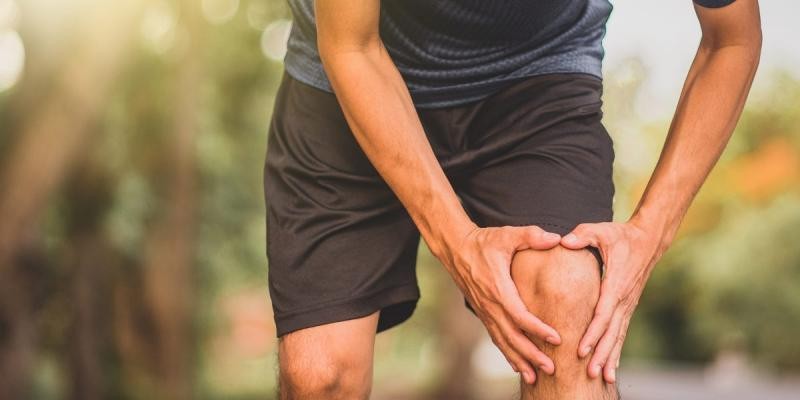
Foot Placement Technique For Steep Descents
Slightly bent knee instead of a straight leg. A stiff knee refers to the impact on the joint. The flexed knee position can cause your quadriceps and other leg muscles to absorb the shock before it can reach cartilage and bone. Imagine your leg as a spring that compresses when hitting.
Use shorter strides than when on a flat surface. Long steps enhance the height of the drop between footfalls, which amplifies the impact strength. The reason is that short and quick steps maintain your center of gravity steady and minimize the weight per step. Your general speed will be reduced, but your knees will appreciate it at the foot.
On steep areas, point your toes a bit outwards. This angle will involve your hip muscles and glutes to distribute the braking force with your quads. Having a straight-ahead feet stance isolates work in your thighs and knees. The extended posture also enhances stability on rugged or uneven ground.
How Trekking Poles Protect Your Knees
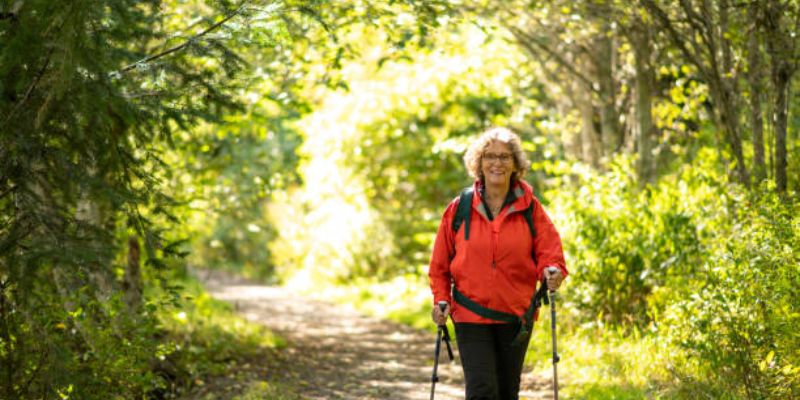
The trekking poles reduce as much as 25 percent of the load on your legs to the arms and shoulders. Research in the Journal of Sports Sciences has discovered that poles lessen the load on the knee during downhill walking by 80 percent [2]. These savings are accumulated in thousands of steps in a long descent.
Extend your poles by five to ten centimeters to descend more than when on an uphill or flat terrain. Taller poles allow you to plant them deeper down the slope, which will support you until your foot hits. This pre-loading relieves your legs of weight at the most precarious time of each stride.
Plant poles in front of your feet, not next to them. Your leading foot should touch the ground only after the pole tip has landed on the ground. Step with a pole, pushing down and pushing the weight actively on the arms. Passive pole carrying is of little use. The difference is in being actively involved.
Controlling Your Pace On Steep Descents
Do not be tempted to fly downhill. Speed increases impact force exponentially. Trails increase the stress on the knee many times over the capacity of the joints. The time saved of a few minutes is not worth the risk of being injured or damage to the joints accrued.
On long downs take rest intervals, especially on your quads. Fatigued muscles are less efficient in absorbing impact and give more energy to your knees. Taking two minutes of rest allows the muscles to rest sufficiently to go back to shock-absorbing duty. Get a rest before your legs begin to shake.
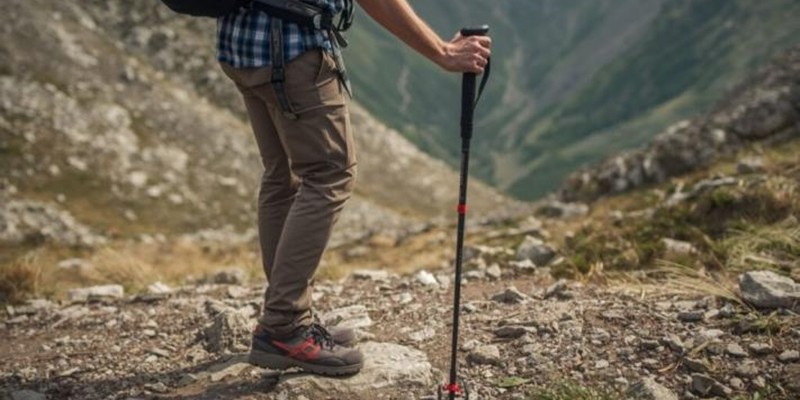
Zigzag where feasible instead of going down the fall line. Switchbacks are there to stay. Travelling decreases the grade of effect, decreasing the effect per step. Where there are no switchbacks, make your own diagonal where possible.
Strengthen Your Legs Before The Trail
Powerful quadriceps cushion more impact before it can hit your knees. The eccentric exercises are specific to the downhill requirements of the muscles. A low platform step-down trains the same pattern of movement that is used on the descending trails. According to the American College of Sports Medicine, eccentric training is recommended to hikers intending to climb steep terrain [3].
Wall sits develop endurance to handle long descents. Begin with 30-second holds and move up to two minutes. Single-leg squats, along with lunges, build strength and balance. Start by training your legs twice a week and a minimum of six weeks before approaching challenging descents.
Protect Your Knees For Years Of Hiking
Hiking does not necessarily cause knee pain. When used properly, trekking poles, slow speed, and proper strength allow you to go down thousands of feet without damaging your joints. Several hikers in their sixties and seventies hike up steep trails with a lot of ease since they were taught these practices at a tender age.
Begin on moderate descents and practice on steep terrain afterwards. Concentrate on a single method and practice it until it becomes a habit. Your knees are not to be worn out before you finish a lifetime of adventures, when you give them the respect they merit on each downhill run.
References
[1] Knee Health and Joint Forces - American Academy of Orthopaedic Surgeons - https://orthoinfo.aaos.org/globalassets/pdfs/2017-rehab_knee.pdf
[2] Trekking Poles and Knee Loading - Journal of Sports Sciences - https://www.tandfonline.com/toc/rjsp20/current
[3] Eccentric Exercise for Hikers - American College of Sports Medicine - https://acsm.org/eccentric-contractions-muscle-damage/
Related Posts
Outdoor Gear
Emergency Bivvy Bags: What They Are And When You Need One
Outdoor Gear
How to Use Trekking Poles: Techniques, Tips, and Terrain Adjustments
Guides and Tips
Hiking Poles Guide: When Do You Actually Need Hiking Poles
Destinations
Best Hidden Waterfall Hikes in Colorado for Beginners
Guides and Tips
How To Choose The Right Socks For Hiking And Avoid Blisters And Cold Feet
Destinations